Into occupational therapy
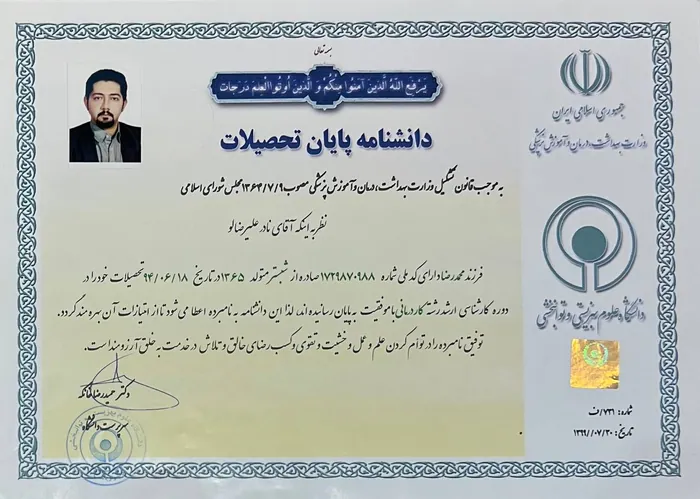
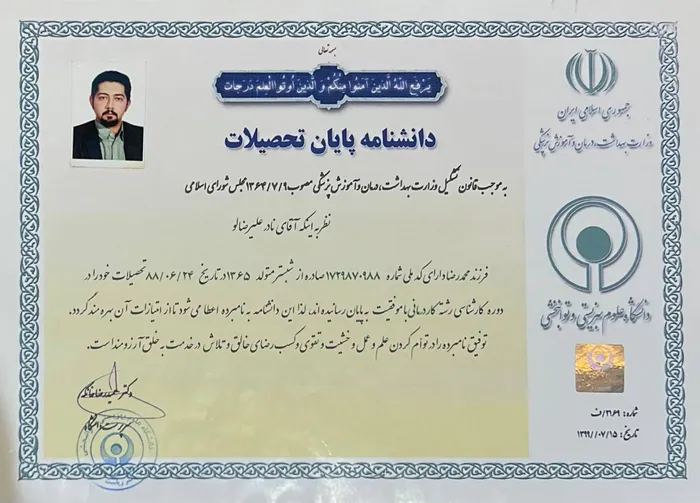
Begins the BSc at the University of Social Welfare and Rehabilitation Sciences in Tehran, and starts working in the clinic alongside it.
Innovative and impact-driven rehabilitation specialist with over 20 years of experience in occupational therapy, neurorehabilitation and assistive technology development. Founder and director of multiple rehabilitation centres and production units specialising in equipment design for children with cerebral palsy and elderly mobility support. Recognised for bridging clinical expertise with engineering innovation to create cost-effective, scalable rehabilitation technologies. Currently focused on expanding international collaboration in rehab product development and AI-assisted neurorehabilitation.
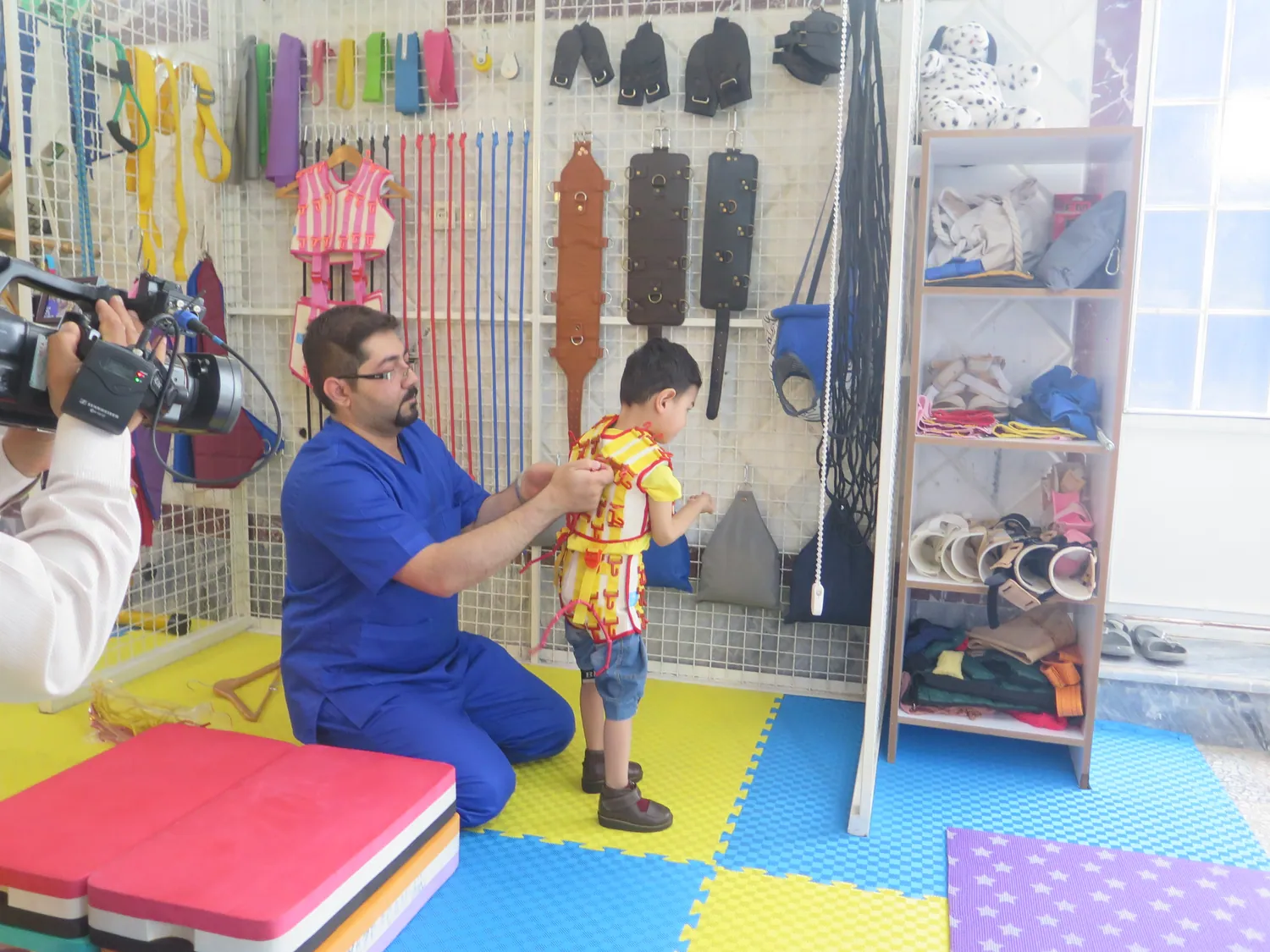
Most occupational therapists work with the tools they are given. For twenty years, Dr. Nader Alirezaloo has worked with the tools he had to invent.
He began in the clinic in 2005, while still studying occupational therapy — neurofeedback and QEEG in adolescents with ADHD, sensory integration in autism, motor planning in cerebral palsy. Along the way he noticed the thing that would define his career: the therapy was often sound, and the equipment was the bottleneck. A suspension system that let a child bear weight for the first time was manufactured in four countries on earth, and none of them were his. Imported reverse walkers cost between $400 and $800; a comparable gait trainer cost €15,000.
In 2015 he founded Avijeh Innovators under the slogan “New Ideas for Change”, with three goals: establish rehabilitation centres, run educational workshops, and design and manufacture rehabilitation equipment. The Spider Cage and the Avizheh Space Suit followed in 2019, both patented under sole ownership, making Iran the fifth country in the world to produce a comprehensive suspension therapy system — after Russia, the United States, Poland and Brazil. Children who could not stand using conventional methods were standing independently within four weeks.
Then came the Reverse Walker in 2020, the Pro Dynamic Walker in 2021, and ProWalk in 2025 — each generation reaching further down the severity scale, until the newest was built for children with no head control, no sitting balance and no standing ability at all.
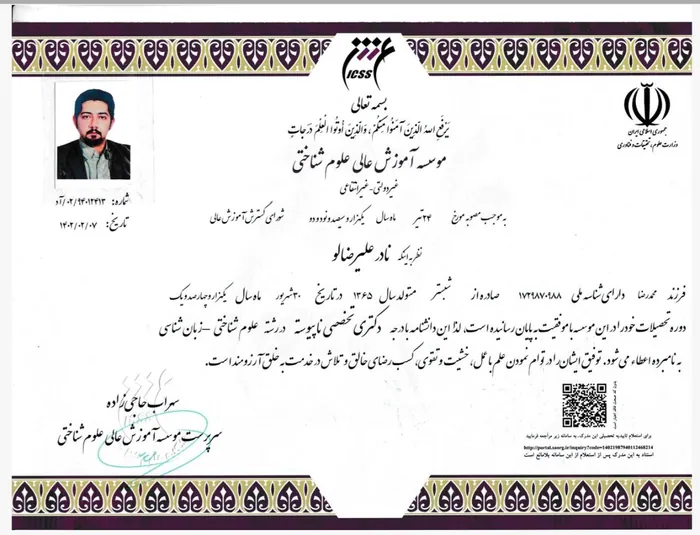
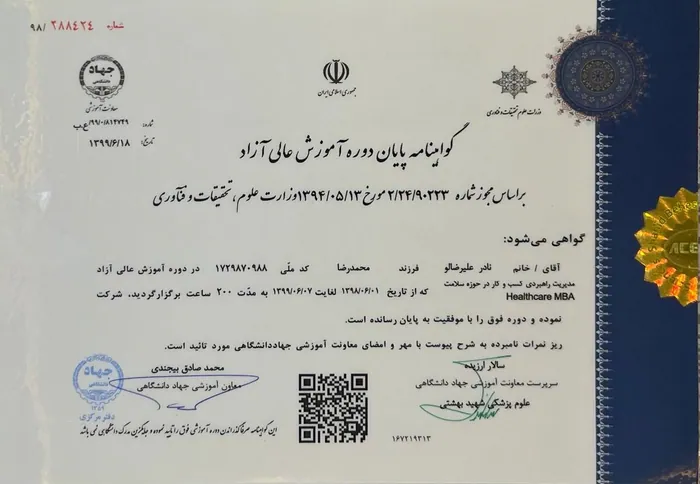
He holds a PhD in Cognitive Linguistics, an MBA in Health Management and an MSc in Occupational Therapy — a combination that reads oddly on paper and makes perfect sense in a workshop, where a device must be clinically defensible, commercially viable, and comprehensible to a parent in ten seconds.
He is founder and CEO of AVIZEKA LLC (Baku) and the Noandishan Avijeh-e Zehn Institute (Tehran), founder of a non-governmental organisation licensed for disability sport, board member of Azerbaijan's first neuroscience laboratory, and the approved Special Olympics Iran representative for East Azerbaijan. He is currently building toward AI-assisted neurorehabilitation.
From a first clinical post while still an undergraduate in Tehran, to six registered devices standing in more than a hundred rehabilitation centres across four countries.
Begins the BSc at the University of Social Welfare and Rehabilitation Sciences in Tehran, and starts working in the clinic alongside it.
Executive Director of the research and development unit at the MehrAfarin Panah Charity Foundation for orphaned children, Tehran.
Technical director and occupational therapist at a day rehabilitation centre for children under 14, under the supervision of the State Welfare Organization of Iran.
The same role at the Varamin day centre for children with physical and motor disabilities — the years that fixed the problem he would spend the next decade solving.
Executive Director and instructor at the Parand Comprehensive Center for Neuroscience and Psychology, Tehran. The MSc in Occupational Therapy begins.
Runs the 19th National Congress of Occupational Therapy of Iran, Tehran — and the 20th the following year.
Founds the Novandishan Avijeh Zehn Institute with three goals: rehabilitation centres, training workshops, and equipment of his own design. Wins Top University Idea for a two-channel brain stimulation device. Three papers published; the PhD begins.
The QEEG-biofeedback study on attention and behaviour in adolescents with ADHD is published — the paper later cited in AJOT. First national television interview, IRIB Channel 1, December.
The clinic the devices would be designed inside. A cooperation agreement with Jahad Daneshgahi is signed the same October.
Mehrvarzan Hami Avizheh registered with the Ministry of Sport and Youth; the Nowandishan Avizheh day centre opens in Tabriz; approved as the Special Olympics Iran representative for East Azerbaijan.
Patents 99973 and 99974, plus design 38297 — making Iran the fifth country in the world producing a comprehensive suspension therapy system. Named Young Entrepreneur at the 11th National Top Youth Festival.
Iran’s first reverse walker registered (41395) and unveiled in Tabriz. Wins the Meydoon national entrepreneurship competition on IRIB Channel 3, episode 34. MBA in Health Management; cited in AJOT Vol. 74(2).
The Pro Dynamic Walker joins the range. AVIZEKA LLC begins trading from Baku, with exclusive and regional representations signed for MedinaTeb, Noavaran and Tiwan.
The first Doctor’s Award, and a Diploma of Honour as Medical Persona. Board member at the launch of Azerbaijan’s first neuroscience laboratory. The PhD in Cognitive Linguistics is completed.
Volunteer at the Special Olympics World Games. A 24-hour national workshop with UNICEF on psychosocial support for children with disabilities in times of crisis. The second Doctor’s Award.
The Doctor’s Award again in Baku. Devices now stand in more than a hundred rehabilitation centres across four countries.
Design 49518, unveiled at the 1st International and 26th Iranian Congress of Occupational Therapy — built for the severity levels no other device reaches. A fourth consecutive Doctor’s Award, and the neurofeedback and QEEG anxiety study published in the Azerbaijan Medical Journal.
From a workshop in Tabriz to a company in Baku, and toward AI-assisted neurorehabilitation.
Noandishan Avijeh-e Zehn Institute — AVIZEKA LLC · Tehran, Iran · Baku, Azerbaijan
avizeka.azFounded and led a rehabilitation technology company specialising in equipment for children with cerebral palsy and motor disabilities. Designed and commercialised innovative products such as reverse walkers and Spider Cage therapy systems, reaching over 100 centres in Iran and neighbouring countries. Managed cross-functional teams in R&D, production and clinical training, ensuring high clinical efficacy and safety. Spearheaded partnerships with rehabilitation clinics, NGOs and governmental health organisations.
Mehrvarzan Hami Avijeh Charity Foundation · Tehran, Iran
Registered under the Ministry of Youth and Sports of Iran
Established a multidisciplinary rehabilitation centre providing occupational therapy, physiotherapy and cognitive training services. Supervised a team of 15 specialists in paediatric rehabilitation and developmental assessment. Implemented evidence-based therapy protocols improving functional independence in children with neurodevelopmental disorders.
Novandishan Avijeh Zehn Institute · Tehran, Iran
Founded and managed a specialised institute focusing on advanced brain technologies and cognitive rehabilitation workshops.
Parand Comprehensive Center for Neuroscience and Psychology · Tehran, Iran
Led academic and operational management of the centre, organising and conducting professional training programmes on advanced brain technologies.
Varamin Daily Rehabilitation Center for Children with Physical Disabilities · Varamin, Iran
Under the supervision of the State Welfare Organization of Iran
Shaayestegan Daily Rehabilitation Center · Tehran, Iran
Under the supervision of the State Welfare Organization of Iran
MehrAfarin Panah Charity Foundation for Orphaned Children · Tehran, Iran